
Air Dome Fabric
Air domes are made of vinyl-coated polyester fabric which can be opaque or translucent, matte or glossy finish, and can be made in nearly any color.
How Dome Fabric Holds Its Shape
Dome fabric is welded into a single envelope and held up by constant air pressure. Watch how the two layers work together, and how the fabric moves around fixed doors and ducts.
In this video
Read the transcript
I want to talk a little bit about dome fabric and the pressure within a dome. Domes are made of a thick PVC architectural fabric with a weatherproof coating. This dome has a Tedlar coating, which is a specific coating made by DuPont, the chemical company.
The dome is made of panels of PVC fabric that are dielectrically welded together to create an envelope, and that envelope is inflated through air blowers and kept at a constant structural pressure. Typically that pressure is about one inch of water column, give or take, as its normal operating pressure. If I press on the dome, you can see that it’s pretty tight.
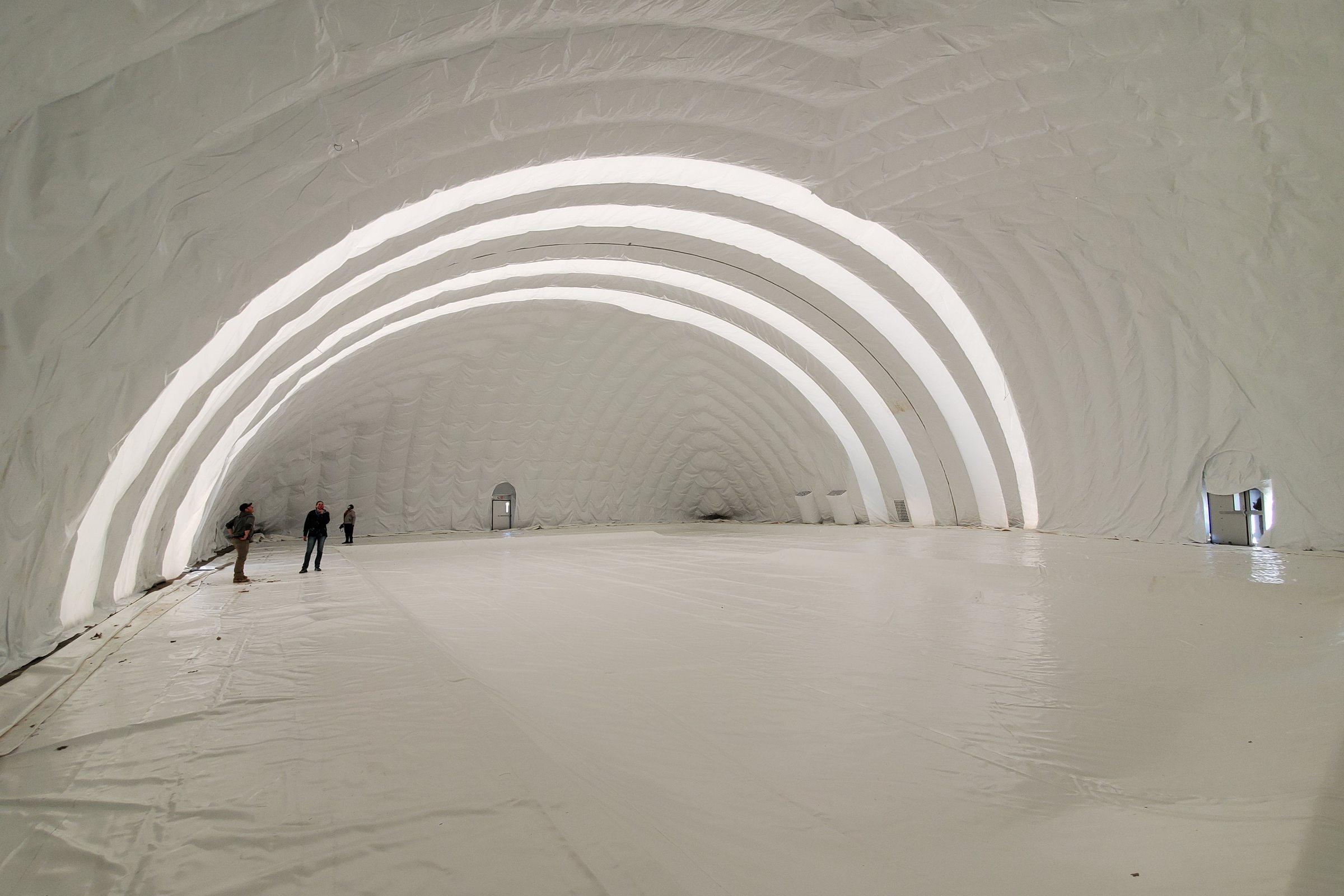
This dome has two layers of fabric. Pushing on the interior layer, you can see that it’s not under a lot of tension at all. That’s because the exterior layer is the layer of the dome that’s under pressure and tension. Why do we have two layers, one under tension and an interior layer that’s not? Because there’s an air gap between the exterior layer and the interior layer, which creates an insulation gap. That reduces your utility costs if, like this dome, you need to temperature control the dome.
I also want to call out a difference between this part of the dome, which is very taut, and this part, where you can see I can push in. It’s not as tight. As you can see, there are doors right here. With a little bit of wind, an air dome is naturally going to move and deflect a little, but the doors are stationary and can’t move. To account for that, we create a boot, or fabric shroud, around the door, with a stress-relieving cable and an extra amount of fabric that’s under low pressure.
The full pressure of the area around the door is taken up by the stress-relieving cable that goes all the way around the stationary item, whether it’s a door or an HVAC duct. As the dome moves, the extra piece of fabric can move with it, protecting the door and keeping the fabric from pulling away from it.
If you have any questions about our fabric and about dome pressure, feel free to reach out to us.
Fabric at a Glance
All fabric is lab tested for strength and tear resistance.
- Thicker than many competitors’ standard dome fabrics
- 30–45%
- Of daylight passes through translucent fabric. Opaque fabric blocks all light.
- ~70%
- Fire certification passed by all of our fabric
- NFPA 701
Your options
- Coating
- PVDF or Tedlar
- Finish
- Matte or glossy
- Light
- Opaque or translucent
- Color
- Nearly any
- Layers
- Single or double (insulated)
Exterior Fabric
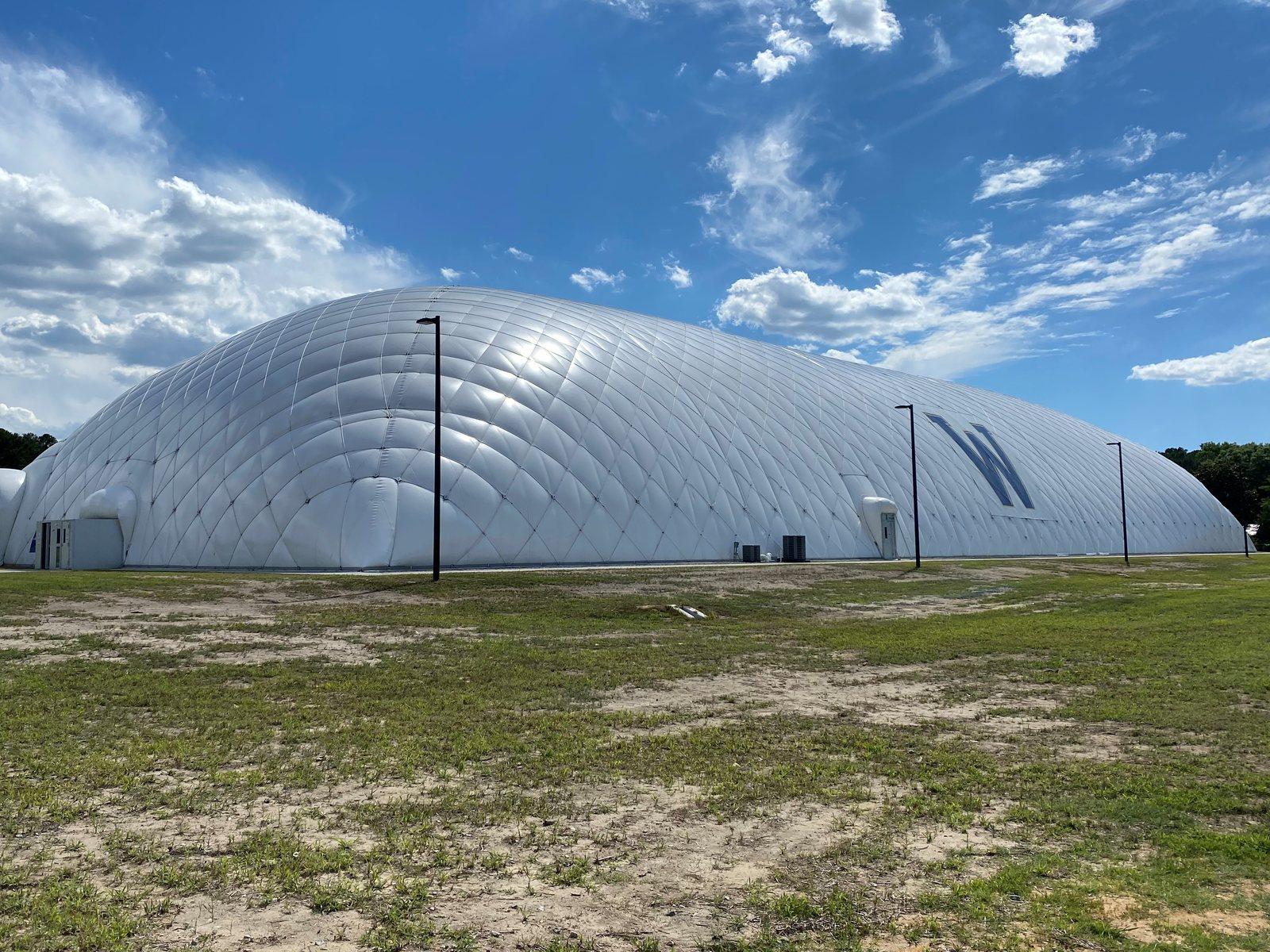
Dome exterior fabric is coated in either a PVDF or Tedlar coating, is self-cleaning, provides UV protection, is anti-corrosive and has anti-fungal properties.
Fabric can be opaque (blocks all light) or translucent (lets daylight through). Fabric can be made almost any color.
Interior Fabric
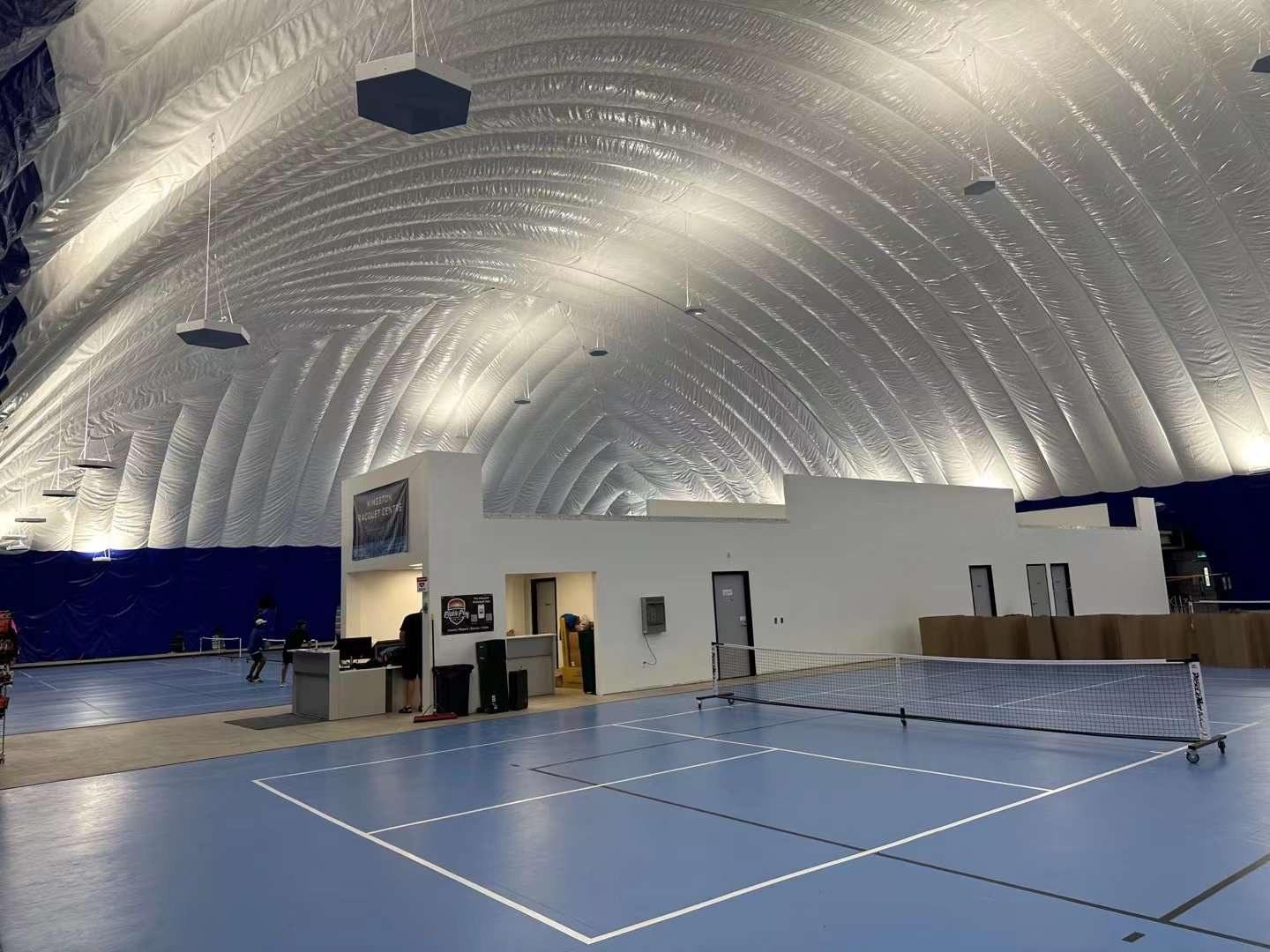
Domes with a second, interior layer of fabric have better insulation properties and are more energy efficient for temperature-controlled environments. Additional radiant barrier insulation panels can be added in-between the fabric layers.
Interior fabric is typically white, and sports domes usually opt for the first 14′ of fabric to be blue or green for greater contrast with sports balls.
Superior Energy Efficiency of Broadwell’s Fabric Envelopes
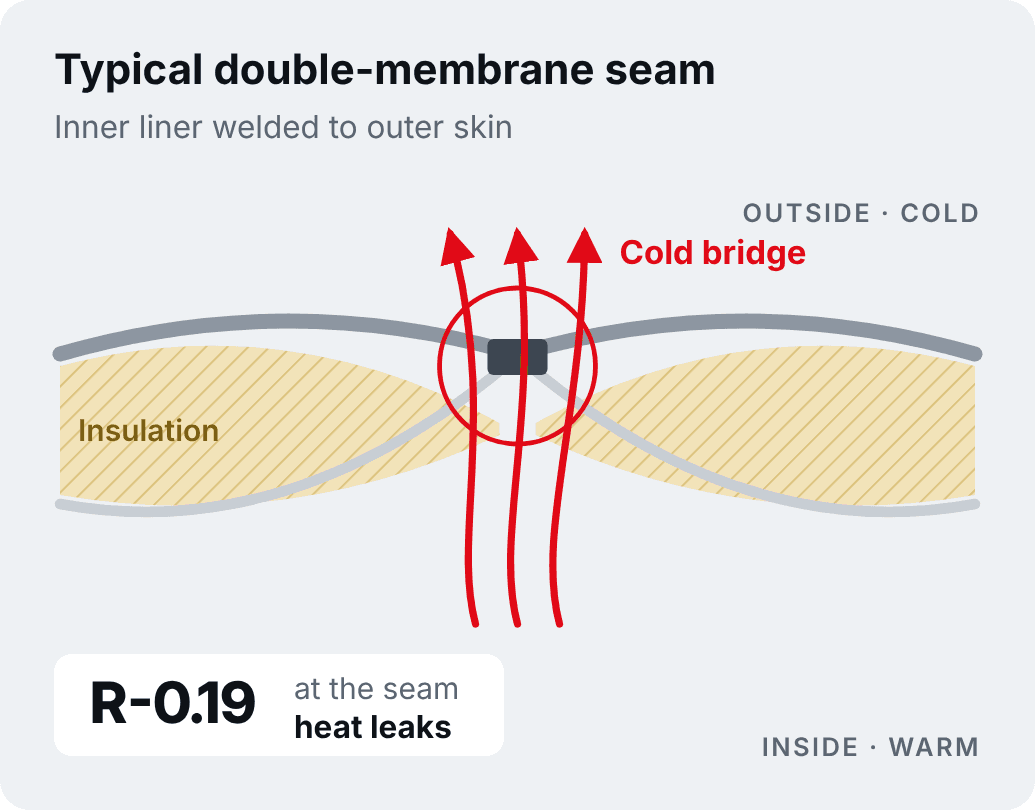
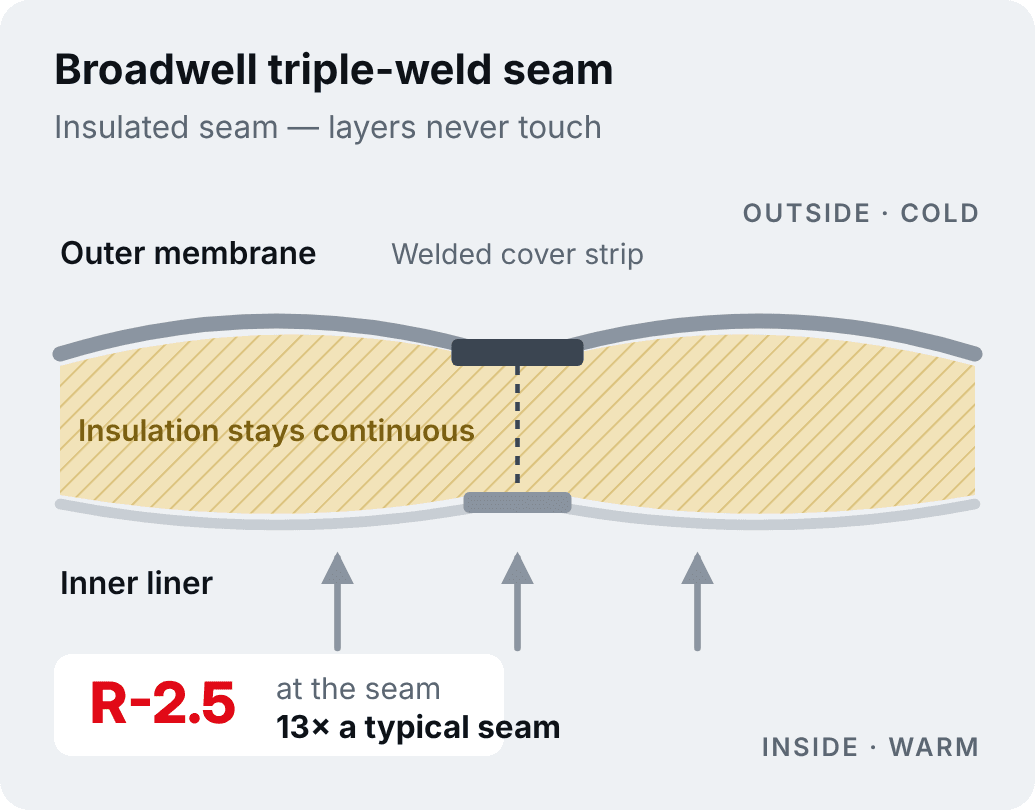
Broadwell domes are designed, engineered and fabricated with energy efficiency in mind. Our fabric envelope seams are created to have the highest R-value possible, eliminating the “cold bridge” effect created when exterior and inner fabric are directly welded together.
The result of our triple welds is that the dome is much more energy efficient, reducing ongoing heating and/or cooling costs.
A Broadwell triple-weld seam has an R-value of R-2.5, compared with R-0.19 at a typical double-membrane weld. That is 13 times higher at every seam.
See how the triple weld works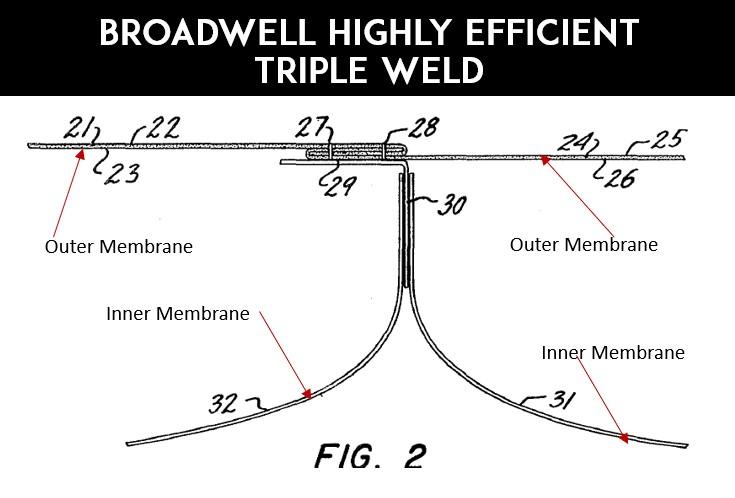
Make the Dome Your Own
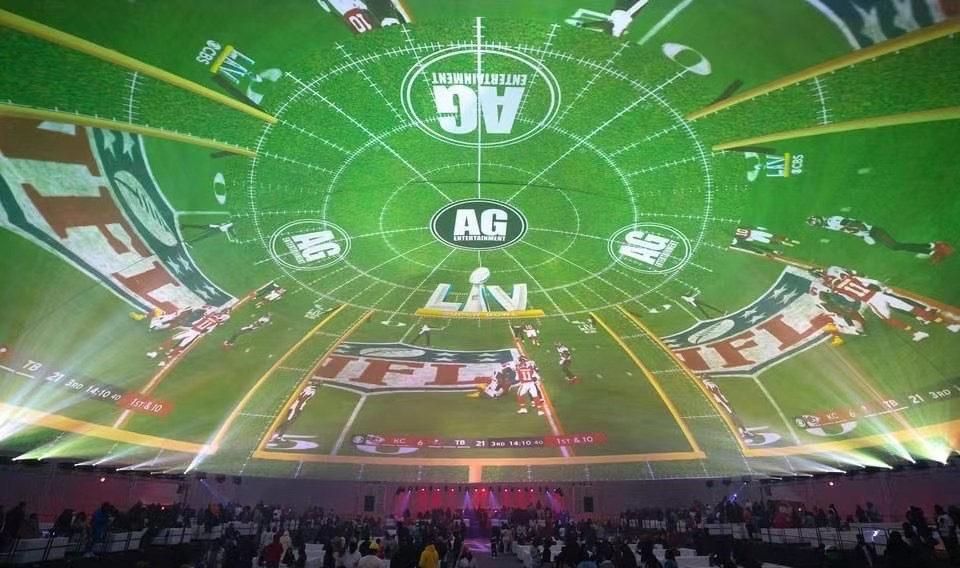
Logos or advertisements can be placed on the interior or exterior of the dome, or they can be projected with video projectors on the dome surface.
Video Projection and EventsCommon Questions About Dome Fabric
Quick answers on lifespan, materials, fire rating, light, cleaning and installation.
About 25–30 years for permanent domes and about 20 years for seasonal domes. Fabric warranties vary by product, so ask us for current terms.
Air domes are made of vinyl-coated polyester fabric. Dome exterior fabric is coated in either a PVDF or Tedlar coating, is self-cleaning, provides UV protection, is anti-corrosive and has anti-fungal properties.
Yes. All of our fabric has passed NFPA 701 fire certification, and all fabric is lab tested for strength and tear resistance.
Opaque fabric blocks all light. Translucent fabric allows about 70% of light through. Fabric can be made almost any color.
The exterior coating is self-cleaning. When the fabric needs washing, clean it with a power washer and mild detergent.
No. Fabric can’t be installed below 45°F or rolled out in rain, so plan weather days into the schedule.
Dome Components
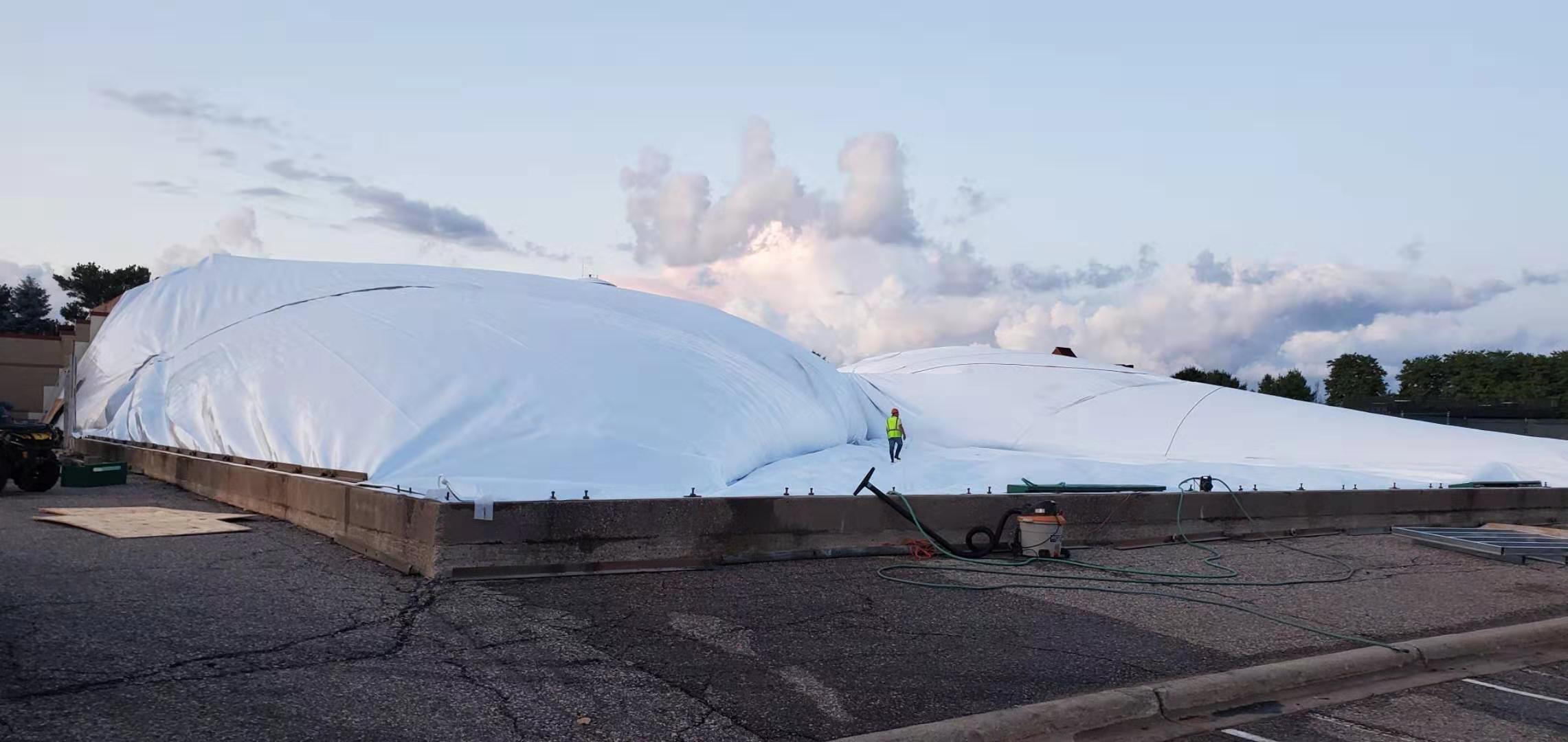
Our domes are comprised of various mechanical elements. Explore what makes up a Broadwell dome:
Choose the Right Fabric for Your Dome
Send us your location, intended use and approximate size. We’ll come back with a dome concept, a budget range and a schedule.
Get My Dome Estimate