Example
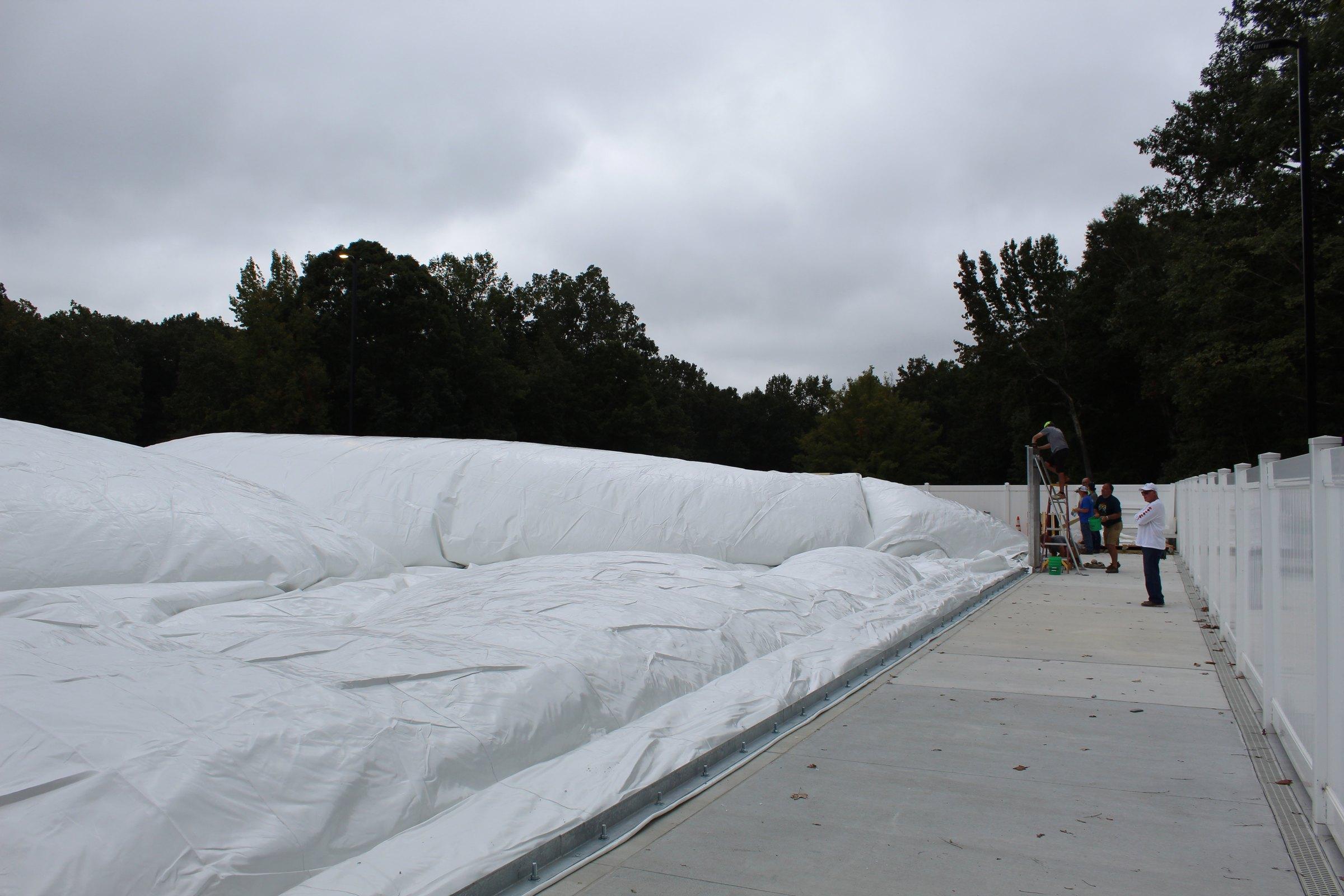
Steel Plated Box Filled with Gravel
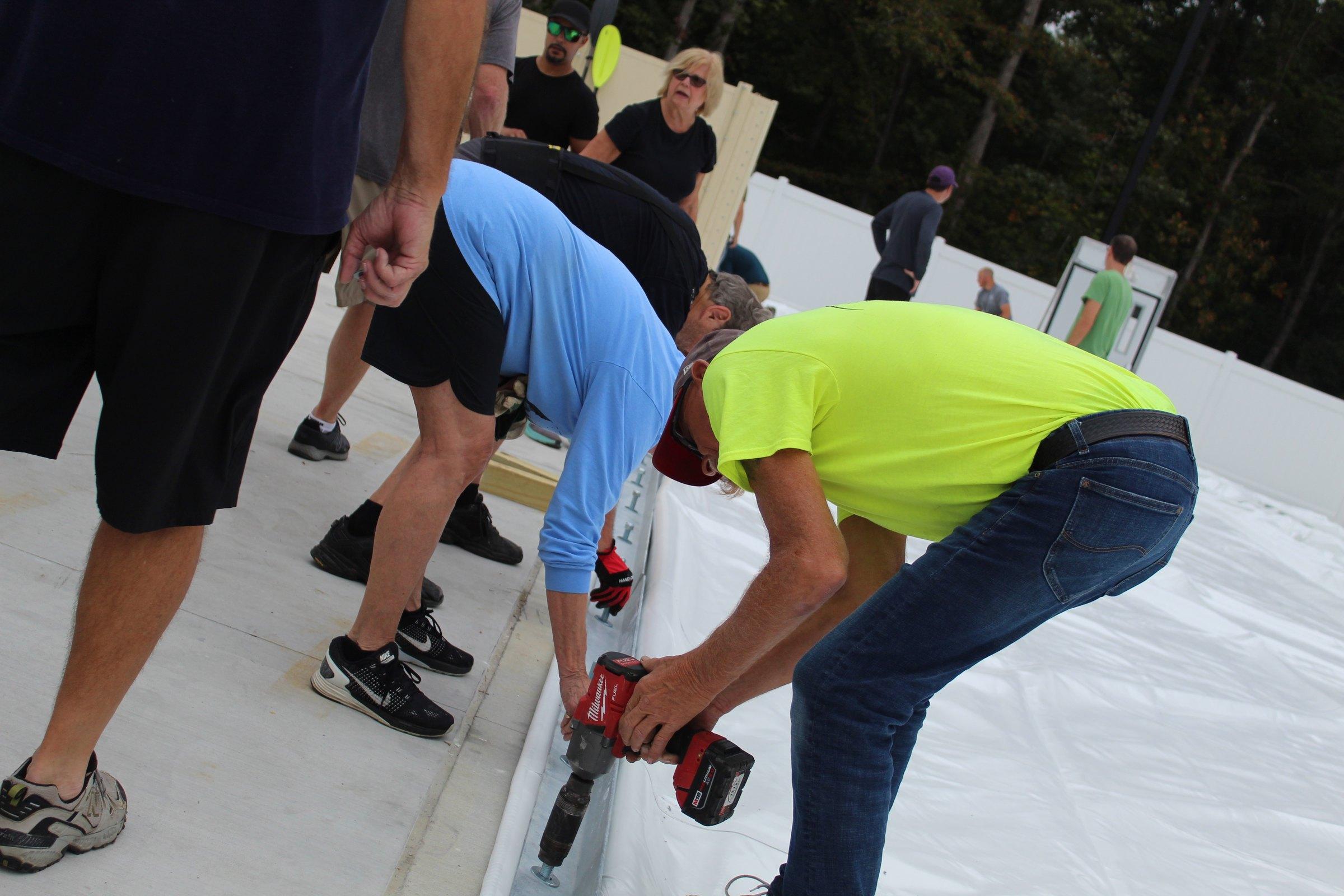
This custom anchoring system was developed by Broadwell engineers for a client who owned a gravel pit and wanted to use gravel in their anchoring system.

An air dome foundation is designed to counteract uplift and shear forces acting on the dome, and to maintain an air seal.
Soil testing can determine the load bearing capacity of your soil. The same earth anchor holds very different loads depending on what it's driven into.
Obtaining a geotechnical report from professional soil testing may be required.
Broadwell’s structural engineers design the anchorage from your soil report and local wind and snow loads.
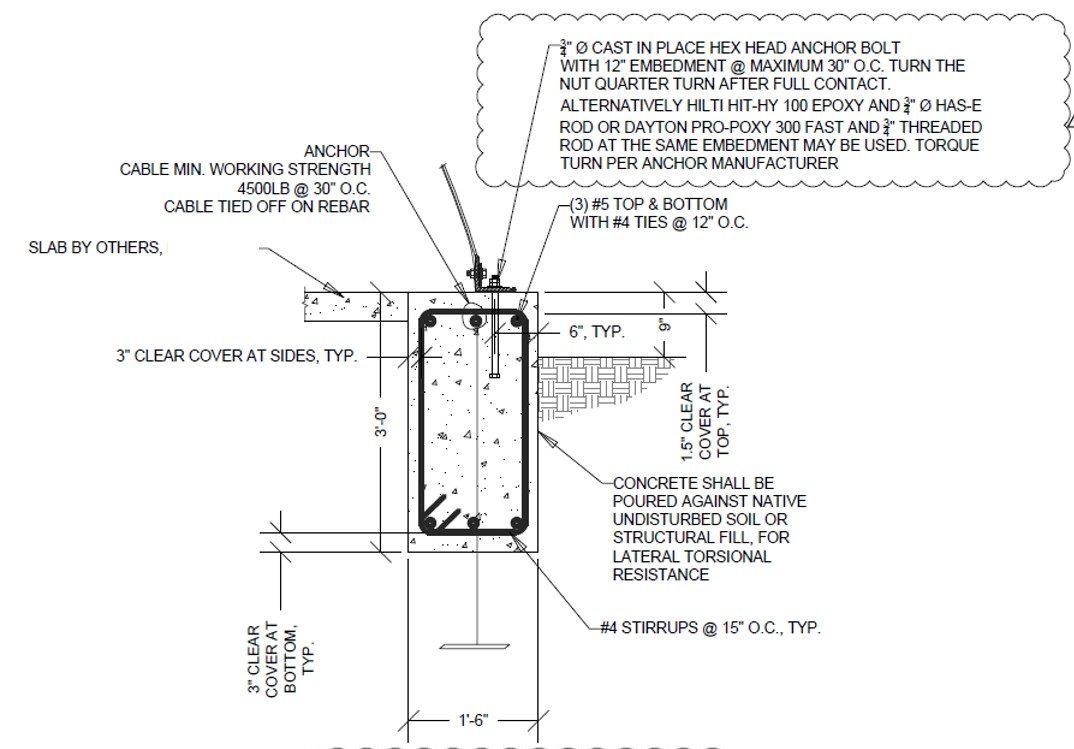
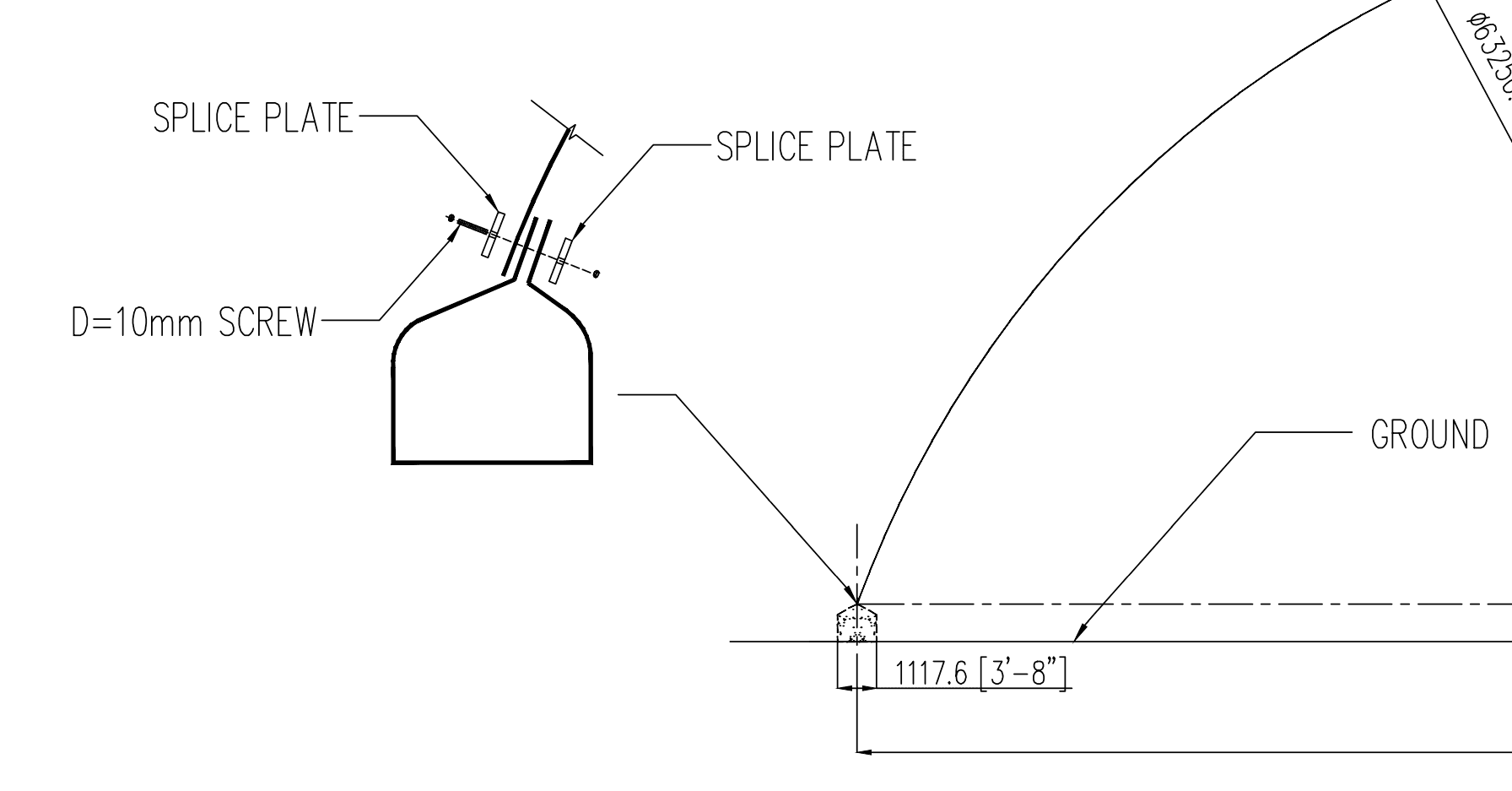
Most often used for permanent applications, many Broadwell domes have anchoring systems that consist of a grade beam concrete footing with embedded bolts, to which the dome is attached using steel angle irons. The width and depth of the footing will depend on the anchoring forces required for your specific dome, and the holding capacity of your soil. The grade beam can sit raised or flush with grade.
Given recent increases in building material costs, including concrete, a hybrid grade beam and angle-iron foundation may be preferable, as this design shows. Note: this is an example design. Your design may be different.
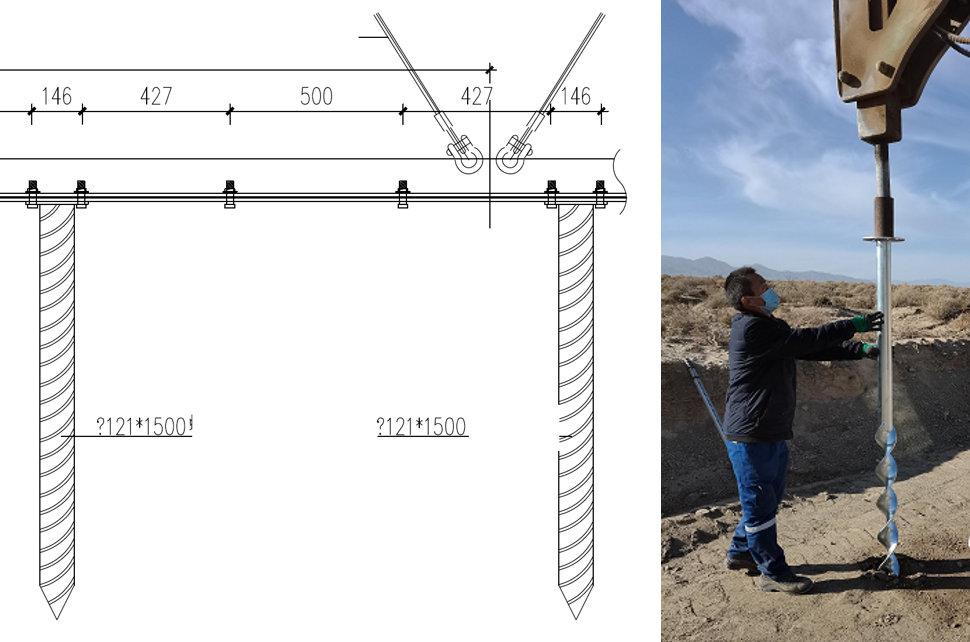
Helical anchors can be used in some dome applications, depending on the site and soil conditions. Anchors typically attach to flat iron or angle iron. They suit smaller domes where soils allow, without a large concrete pour.
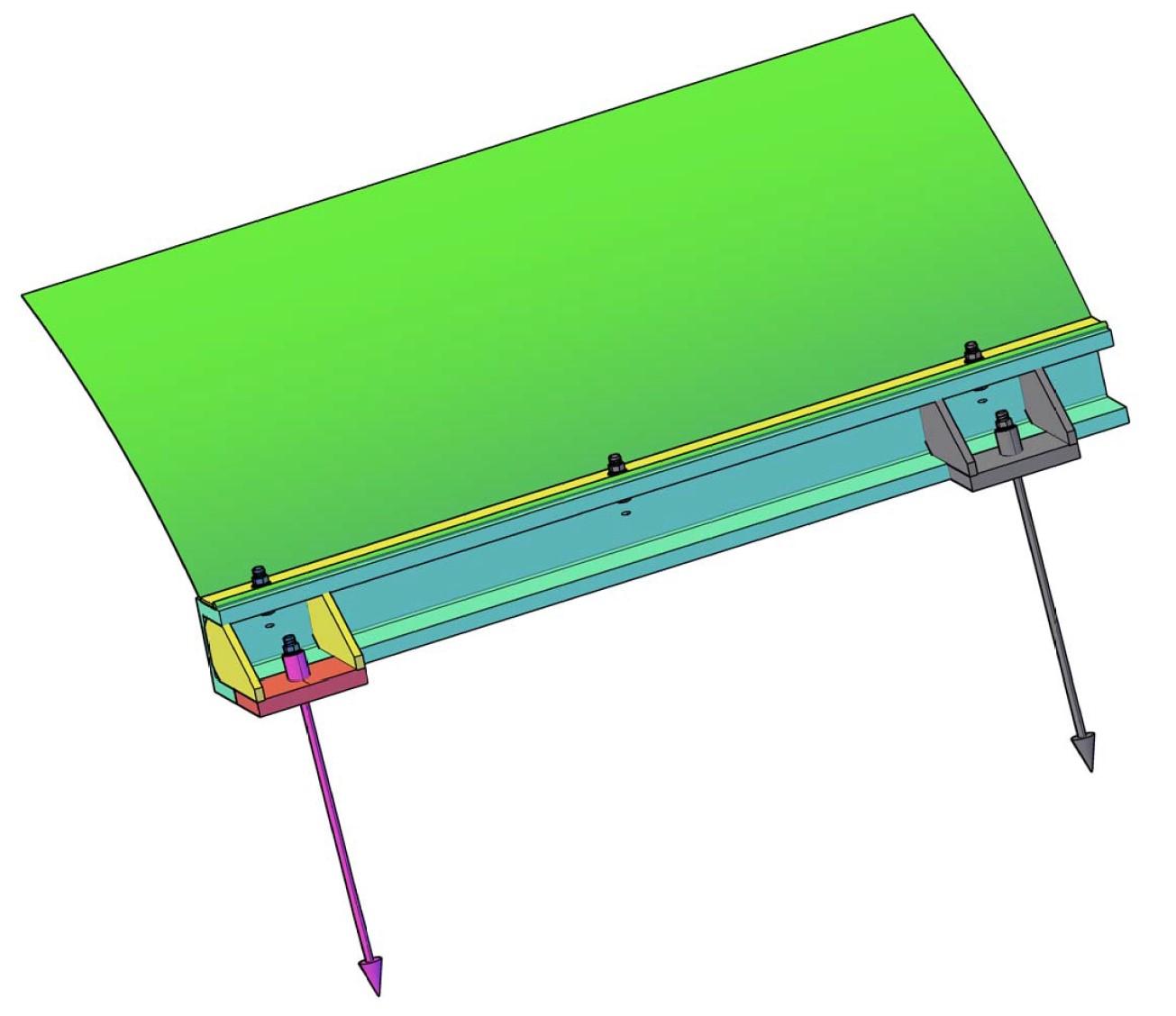
Earth anchors come in various designs, but for Broadwell Air Domes they are typically a steel arrowhead connected to a reinforced cable that is driven as deep as 5′ into the ground. This cable is then anchored into a smaller concrete footing, or to an angle iron.
Knowing soil composition is necessary with this option, as the anchoring load of each earth anchor depends on the type of soil it is being driven into. Obtaining a geotechnical report from professional soil testing may be required.
Our engineers can help you choose the right anchoring system for your site.
Talk to Our Team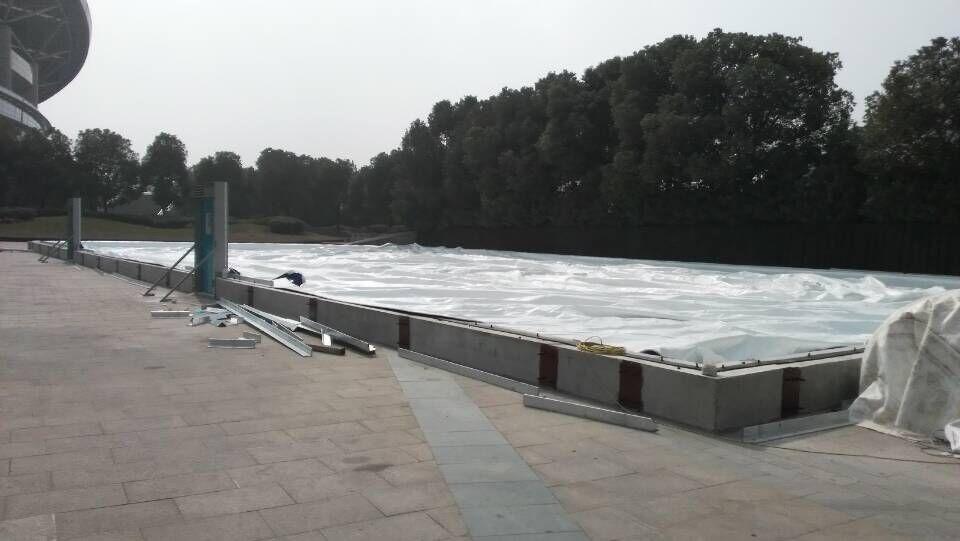
This option is also typically used for mobile or temporary dome applications. Cement blocks (or jersey barriers) are used on the outside perimeter of the dome to weigh it down, or some of our clients have created custom cement blocks with bolts embedded to them, to which the dome is attached.
Some of our mobile “event dome” clients have used cement “bin blocks” to weigh the dome down.
This option is typically used for mobile or temporary dome applications. Your dome would be weighed down with large ballast bags filled with the required amount of sand or gravel.
Our engineers have also designed an anchoring system with a large reinforced tube or bladder of water around the perimeter of the dome. These can be used for smaller domes (typically below 35,000 square feet).
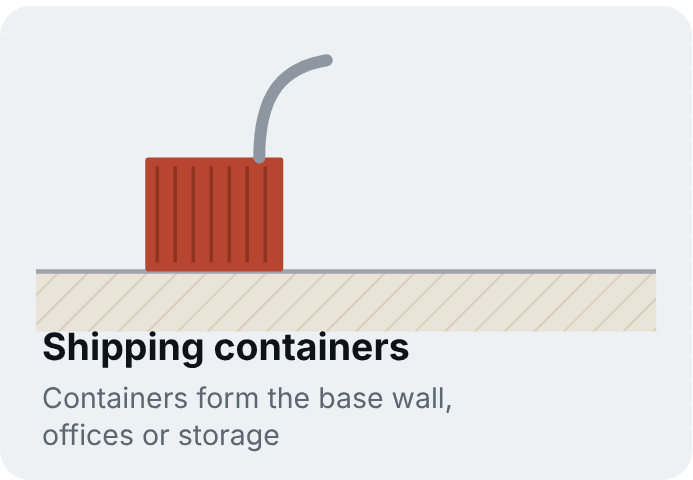
A dome can also sit on a concrete perimeter wall for extra headroom at the edge, or on shipping containers that form the base wall and double as offices or storage.
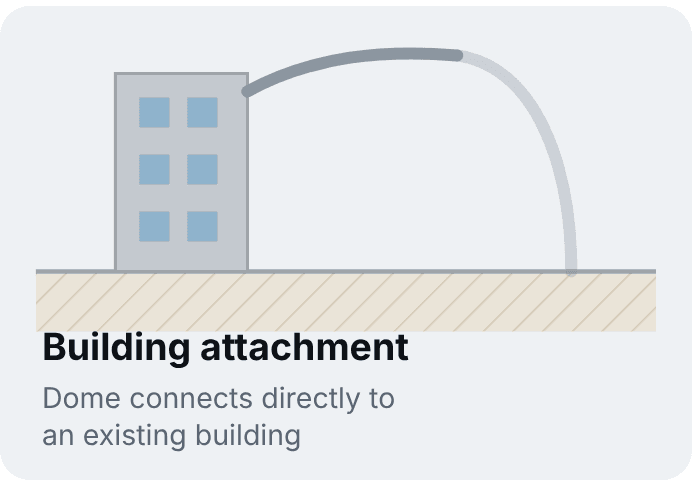
Domes can also connect directly to an existing building.
Explore Building Attachments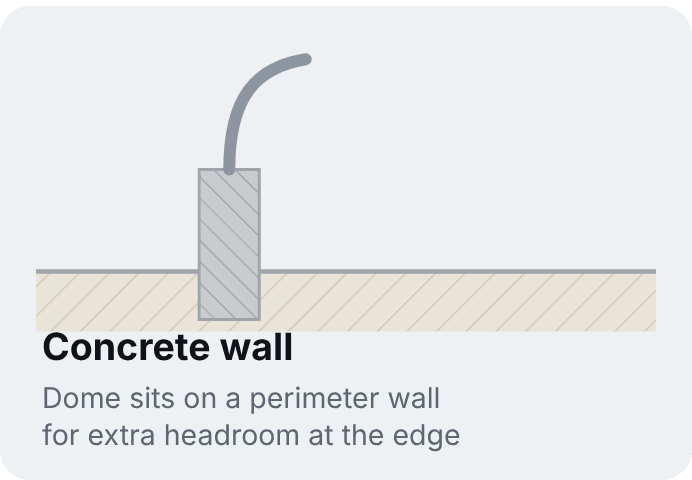
Our team of 50+ employed engineers are the most innovative in the industry. We are constantly developing new and innovative ways to anchor our domes.
Example
This custom anchoring system was developed by Broadwell engineers for a client who owned a gravel pit and wanted to use gravel in their anchoring system.
Your site
The goal of an air dome anchoring system is to create a consistent and strong anchoring force load. As shown above, this can be achieved in a variety of ways.
Quick answers on foundations, soil testing and anchoring options.
An air dome foundation is designed to counteract uplift and shear forces acting on the dome, and to maintain an air seal. Soil testing can determine the load bearing capacity of your soil.
Broadwell’s structural engineers design the anchorage from your soil report and local wind and snow loads. Your general contractor builds the foundation, including the grade beam, anchor hardware and equipment pads.
Usually, yes. The holding capacity of an anchor depends on the soil it goes into: one of our earth anchors may hold 5,000 lbs in hardpan or asphalt but only 600 lbs in loose, fine, uncompacted sand. Obtaining a geotechnical report from professional soil testing may be required.
Yes. Mobile and temporary domes can be weighed down with cement blocks or jersey barriers, or with ballast bags filled with sand or gravel. Smaller domes, typically below 35,000 square feet, can use a large reinforced tube of water around the perimeter. Helical anchors can also suit smaller domes where soils allow.
Yes. A dome can sit on a concrete perimeter wall for extra headroom at the edge, or on shipping containers that form the base wall and double as offices or storage. It can also connect directly to an existing building.
Our domes are comprised of various mechanical elements. Explore what makes up a Broadwell dome:
Tell us your dome size, location and soil conditions, and we’ll put together a budget estimate.
Get My Dome Estimate