
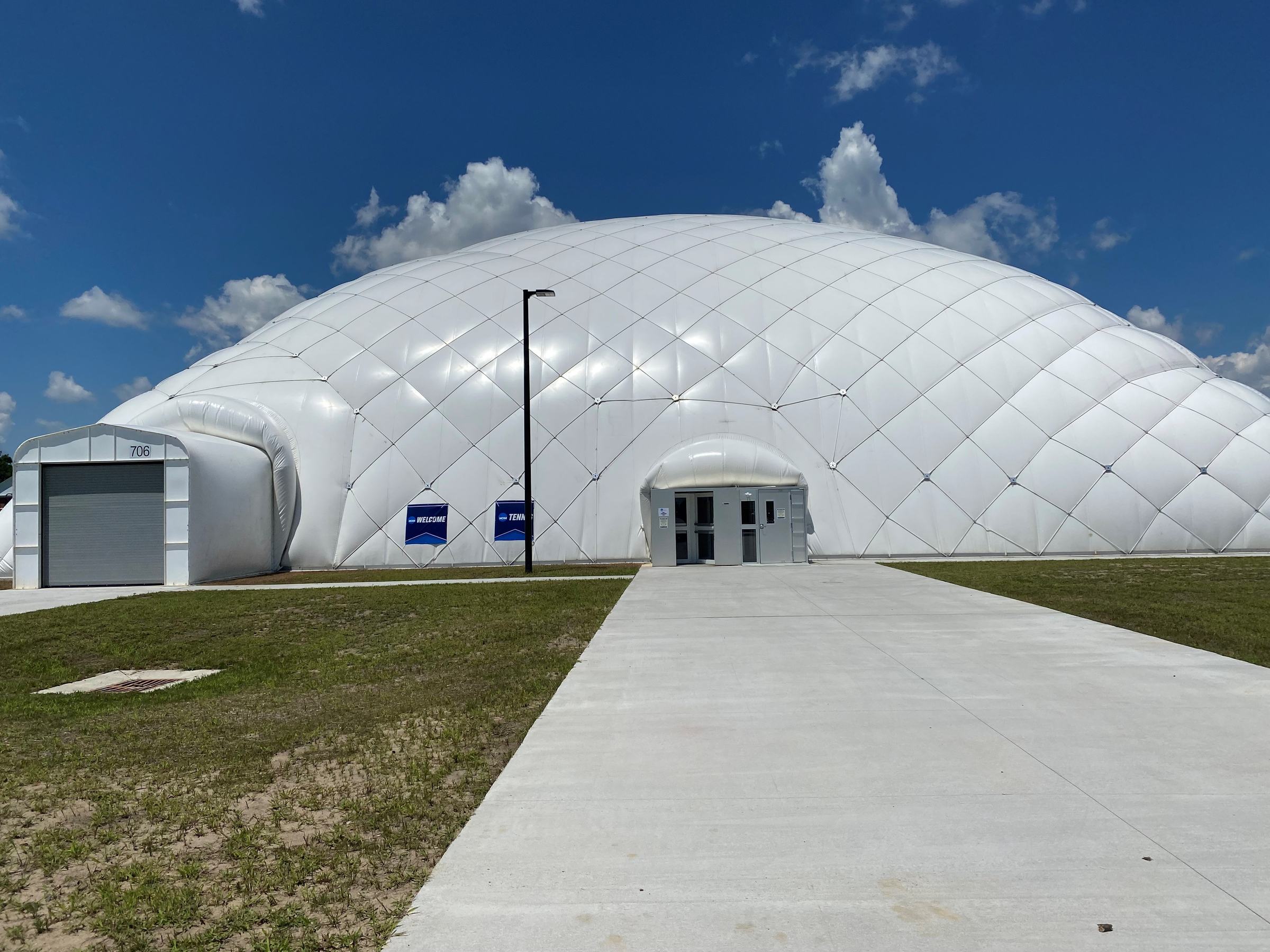
Air Lock Doors
Revolving, personnel, emergency exit and vehicle air locks, built to hold your dome’s pressure while people and equipment move in and out.
Doors for Air Domes
Every door is built to hold the dome’s air pressure. Choose a door type to see how it works.
3-Leaf Revolving Air Lock
Revolving air lock doors are typically the primary egress for pedestrian traffic into and out of the dome. These are designed to handle the pressure differential between the exterior and the interior of the dome. These doors are made from high-grade, anti-corrosive aluminum.
Typical Dimensions: 93″(W) x 84″(L) x 84″(T)
See door prices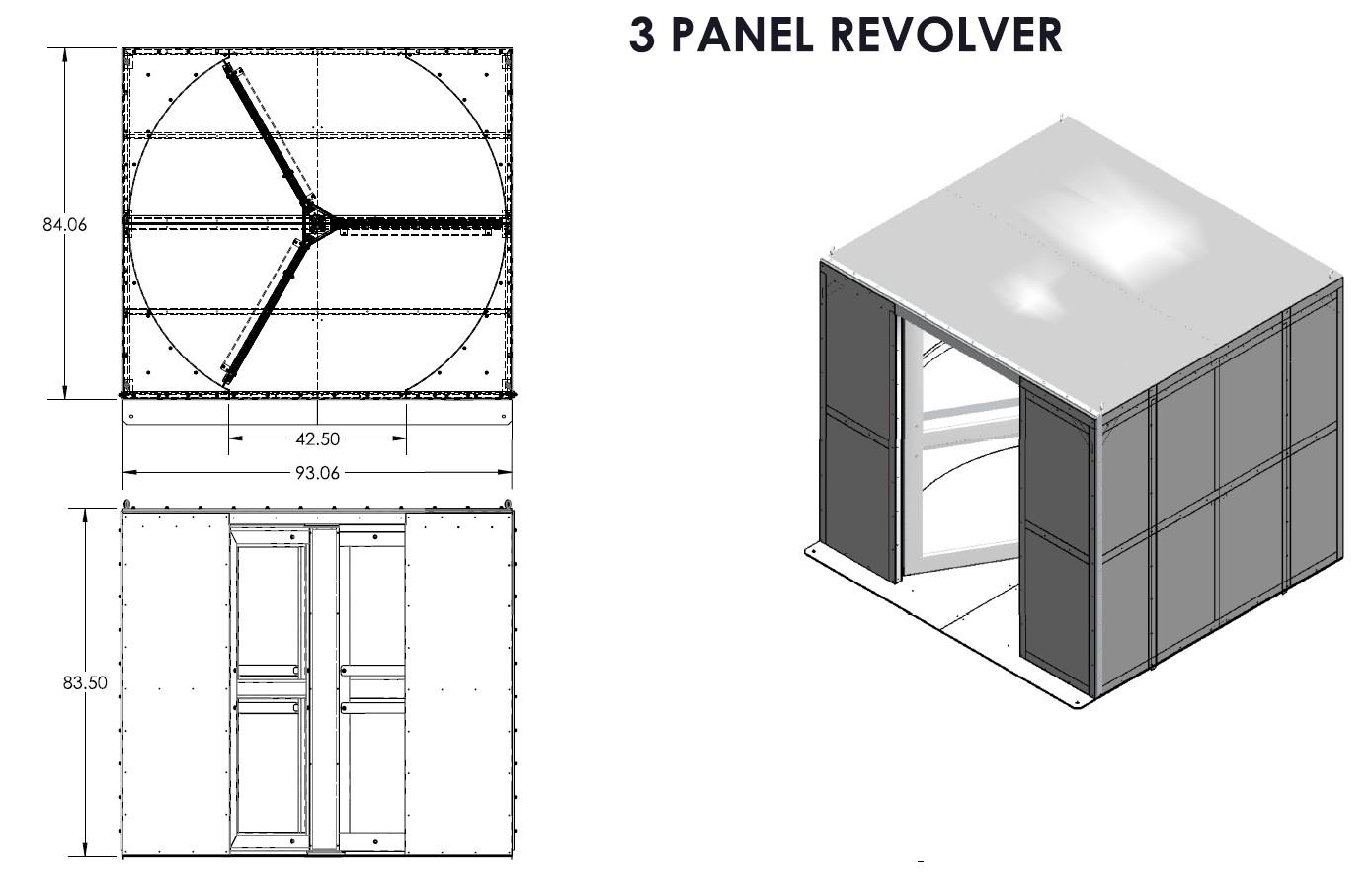
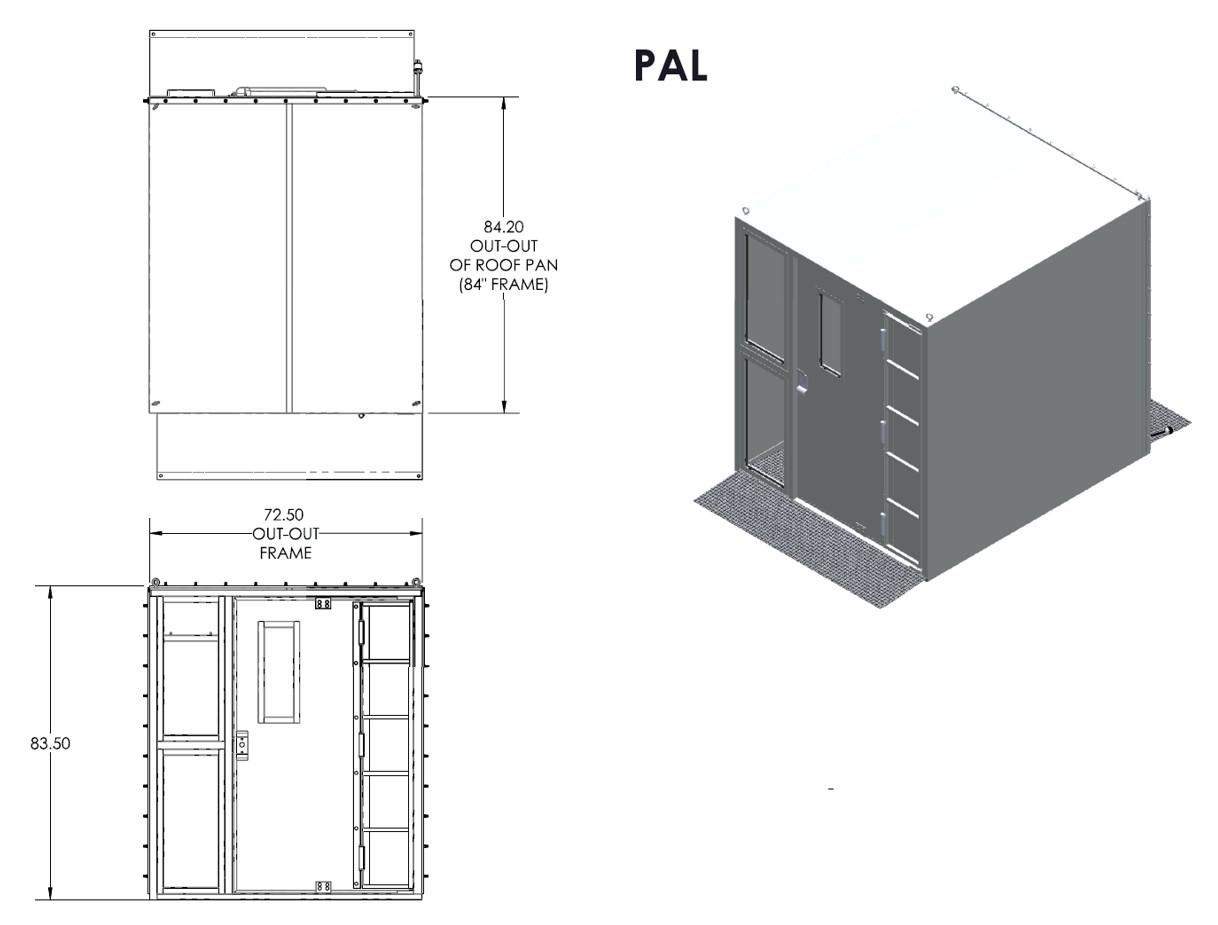
ADA-Compliant Personnel Air Lock
Personnel air lock (PAL) doors allow for wheelchairs and small cargo to pass into the dome, while maintaining the air seal. Most often these doors are included in a tandem combination unit with the revolving door, since IBC (2018) 1010.1.4.1 requires every revolving door to have a swinging door within 10 feet of it on the same wall.
Typical Dimensions: 70″(W) x 84″(L) x 83″(T)
See door pricesSee them in action
Most domes pair a revolving door with a personnel air lock. Here’s how they work together.
Emergency Exit Doors for Domes
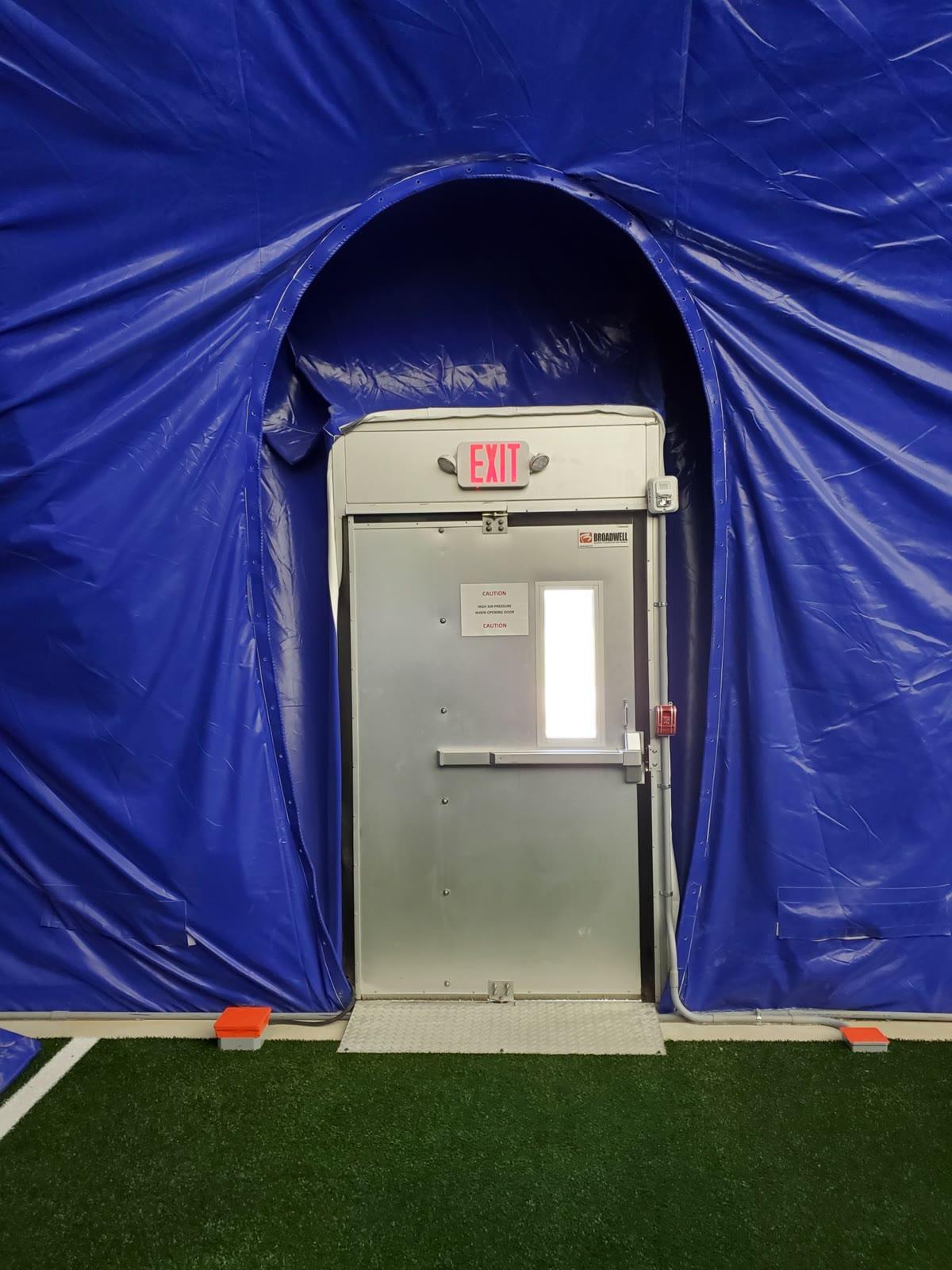
Panic hardware, exit light and emergency lights are included.
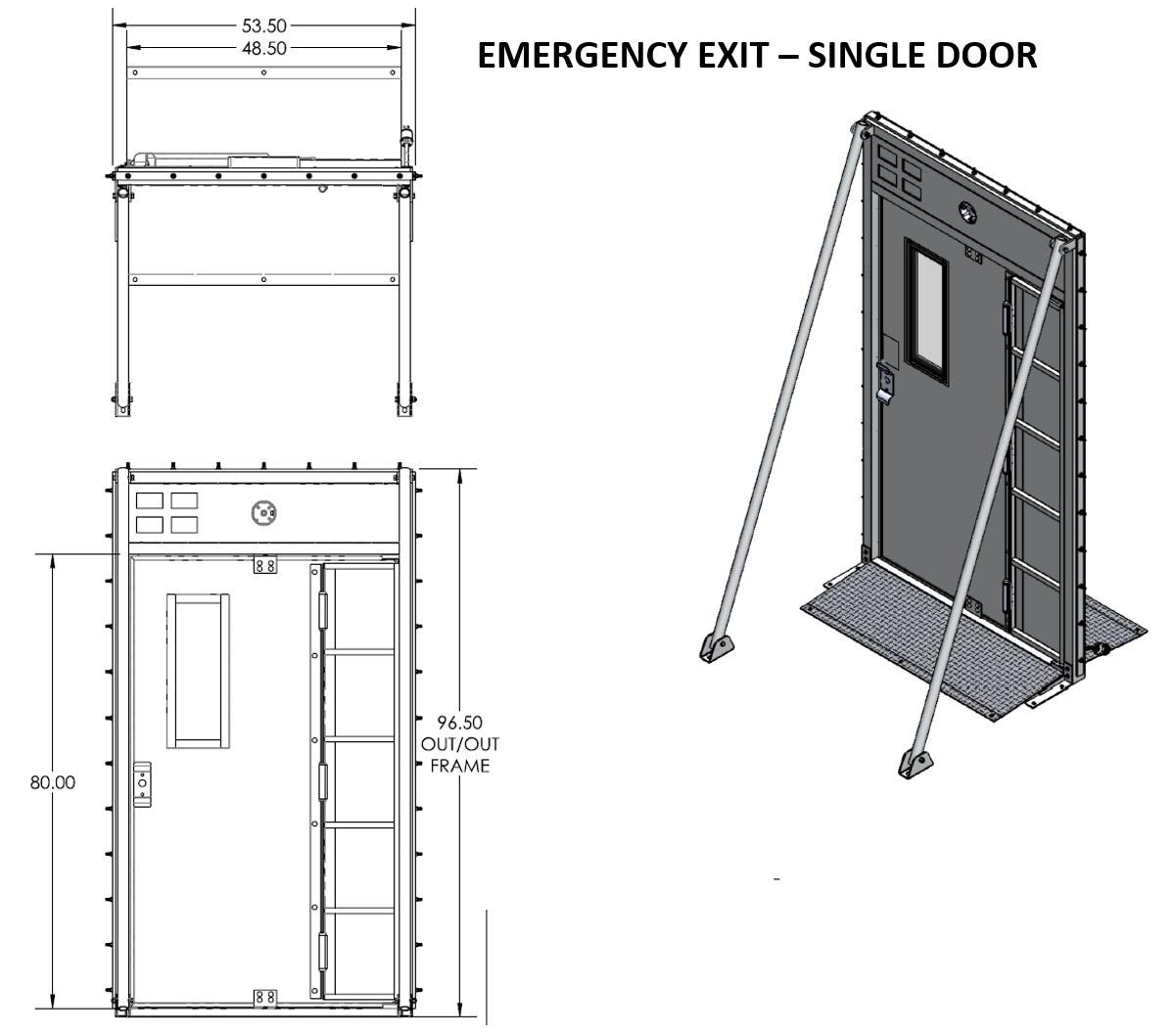
Single exit
53.5″ × 96″
42″ clear-width opening. Exit sign and lights included.
Double exit
104″ × 96″
84″ clear-width opening. Exit sign and lights included.
How Many Exit Doors Do You Need?
- occupants: single exit doors work
- Under 200
- occupants: double exit doors must be used
- 200+
The amount of exit doors you need is primarily a function of your occupancy. IBC (2021) 1005.3.2 states, “The capacity, in inches, of means of egress components other than stairways shall be calculated by multiplying the occupant load served by such component by a means of egress capacity factor of 0.2 inch (5.1 mm) per occupant.” Thus, your occupancy is multiplied by 0.2 inches, and this number helps the architect determine how many exit doors are required by code (our exit doors have a clear width opening of 43″). IFC (2021) 3103.12.2 provides a table of the minimum emergency exit opening widths. Below an occupancy of 200, single exit doors work. At 200 or above, double exit doors must be used.
Note that your local AHJ may have requirements different from codes, as they have the final say on matters related to fire codes and life safety codes.
Not sure which doors your dome needs?
Tell us your use and occupancy. We’ll recommend the right mix of entrances and exits.
Talk to an EngineerVehicle/Cargo Air Lock Doors
Large air lock doors allow you to move cargo and/or vehicles into and out of the dome. This accommodates fork lifts or other vehicles. These air lock doors consist of two rolling garage doors on either end of a tunnel. The doors can be anywhere from 8′ wide/tall to 40′ wide/tall, and the tunnel can be made as long as you need it.
See door prices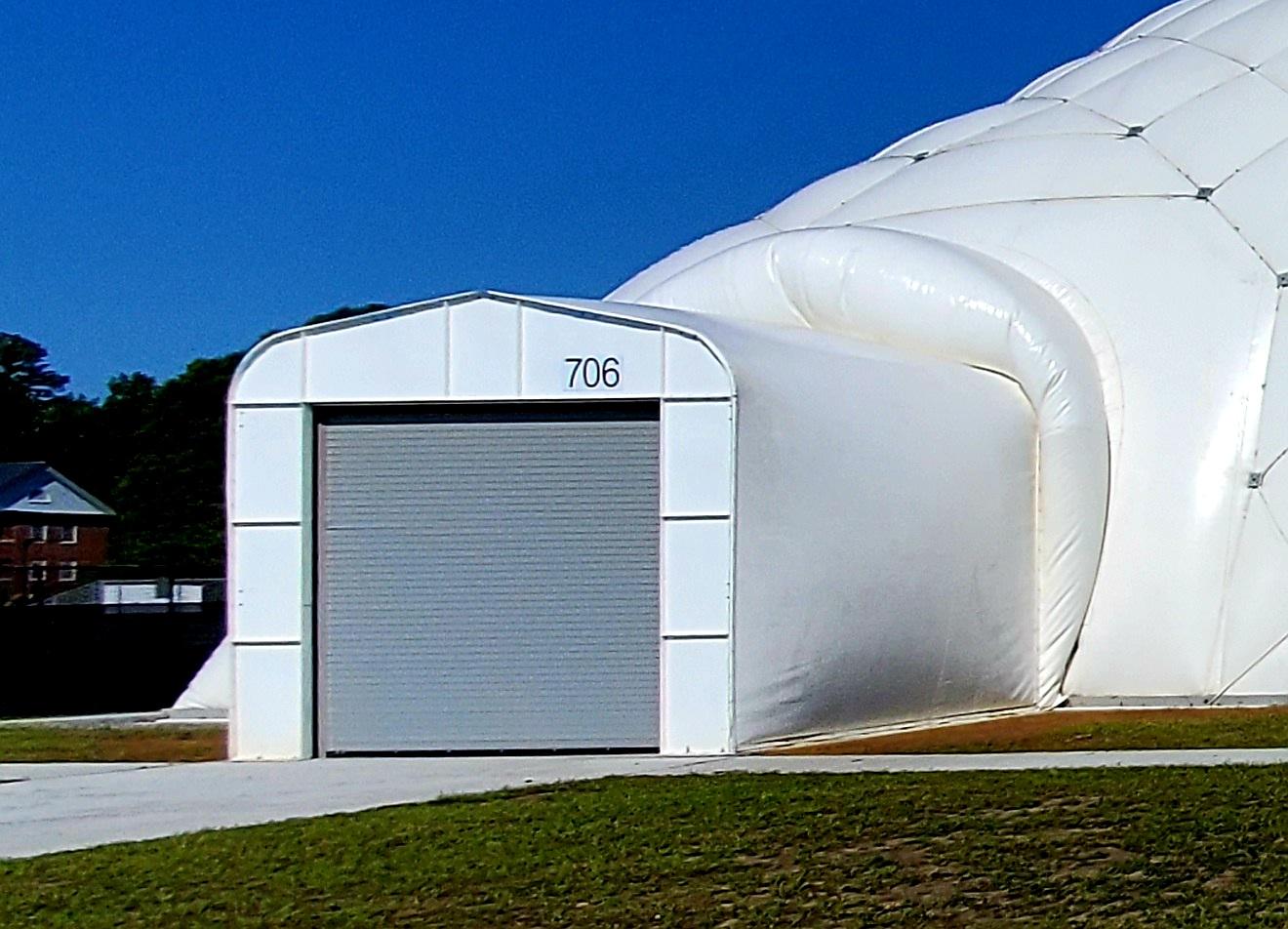
Dome Components
Our domes are comprised of various mechanical elements. Explore what makes up a Broadwell dome:
Air Lock Door Questions
Quick answers on revolving doors, swing doors, exits, vehicle air locks and planning.
Revolving air lock doors are typically the primary egress for pedestrian traffic into and out of the dome. They are designed to handle the pressure differential between the exterior and the interior of the dome, so the pressure stays steady as people come and go. Revolving doors and vehicle airlocks add cost but save energy and time.
Yes. IBC (2018) 1010.1.4.1 requires every revolving door to have a swinging door within 10 feet of it on the same wall, so most domes pair the revolving door with an ADA-compliant personnel air lock in a tandem combination unit.
It depends mainly on your occupancy. Below an occupancy of 200, single exit doors work; at 200 or above, double exit doors must be used. Your architect sizes the exits from the code, and your local AHJ has the final say on fire and life safety requirements.
Yes. Vehicle and cargo air lock doors use two rolling garage doors on either end of a tunnel. The doors can be anywhere from 8′ to 40′ wide and tall, and the tunnel can be made as long as you need it.
Your general contractor builds the door and equipment pads with the foundation. Survey door and HVAC centerlines to ¼ in. before pouring concrete, and meet building and fire officials during design, not after.
Get the right doors for your dome
Tell us how people, equipment and vehicles will move in and out. We’ll recommend the entrances and exits to match.
Get My Dome Estimate